
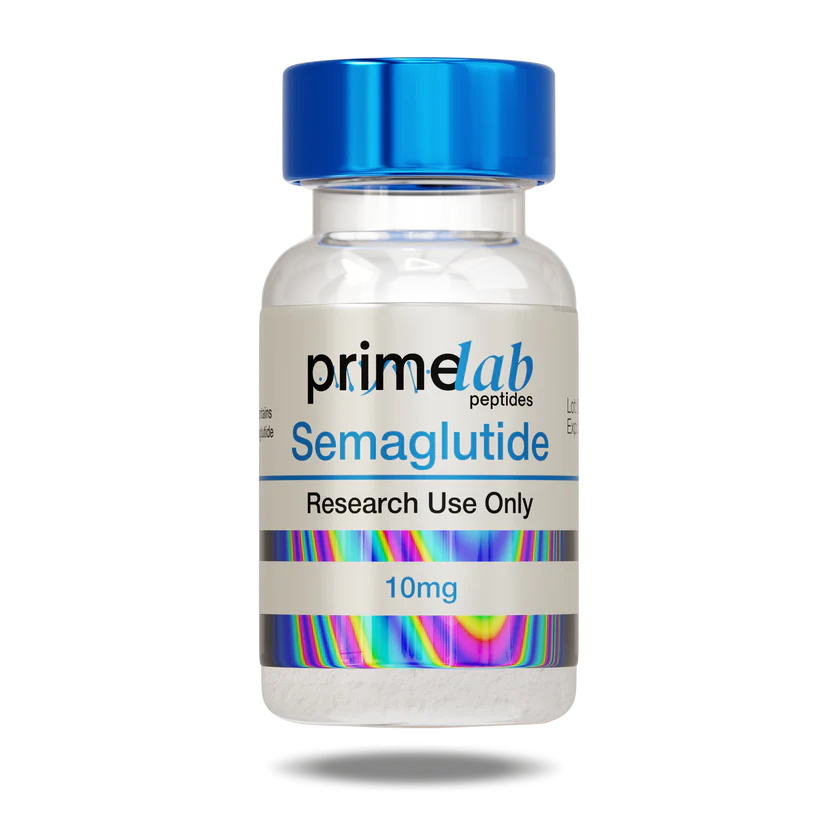
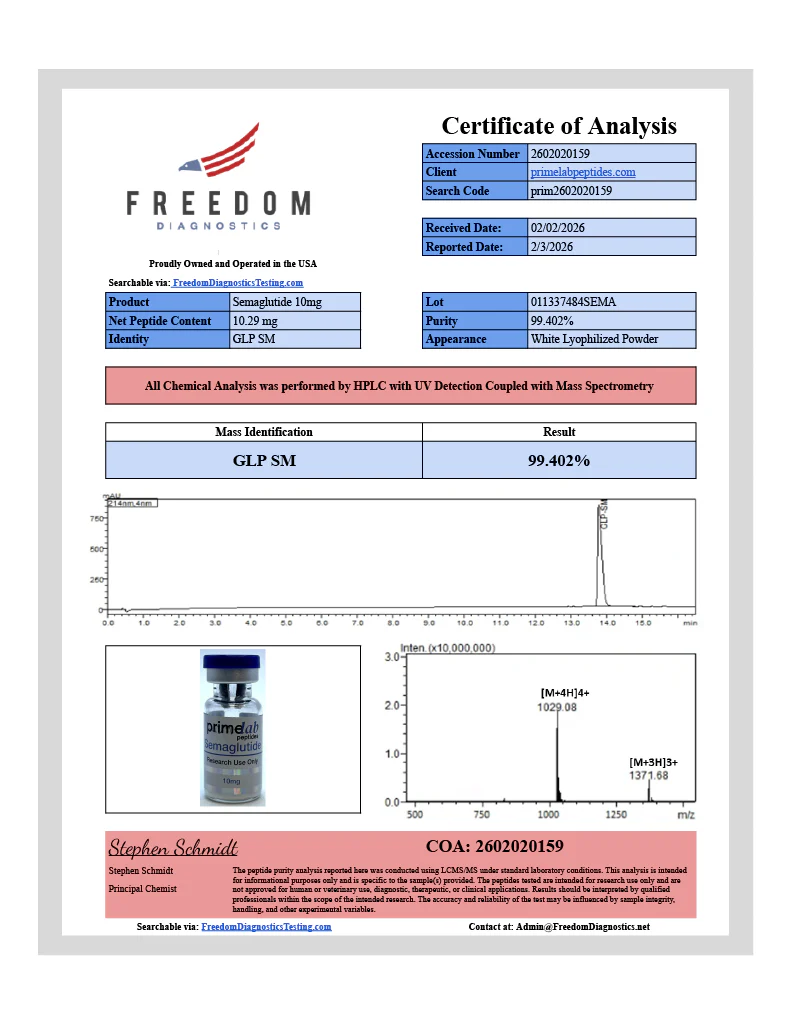

GLP-1SG – 10mg For Sale
Research Overview
The Science Behind GLP-1 Research: Why Semaglutide Remains the Reference Standard
Semaglutide has established itself as the benchmark compound for GLP-1 receptor research. With 94% sequence homology to native human GLP-1 and an extensively documented pharmacokinetic profile, it provides researchers with the reliability and reproducibility essential for rigorous scientific investigation.
What distinguishes Semaglutide structurally? Its engineered resistance to DPP-4 degradation and strong albumin binding create an extended half-life of approximately 7 days — enabling convenient weekly research protocols while maintaining consistent receptor activation throughout the experimental period.
The compound’s multi-pathway mechanism — engaging hypothalamic signaling, gastric motility modulation, pancreatic receptor interactions, and glucagon pathway regulation — makes it invaluable for comprehensive metabolic pathway studies. Researchers can investigate individual signaling cascades or explore how these systems interact under controlled conditions.
As newer dual and triple agonists emerge, Semaglutide serves a critical role as the reference standard for comparative research. Its well-characterized behavior provides the baseline against which next-generation compounds can be evaluated, making it essential for any laboratory studying incretin biology and GLP-1 receptor pharmacology.
For laboratory and in-vitro research use only. Not for human or animal use.
Reference Standard GLP-1 Agonist
The Most Studied GLP-1 Compound for Metabolic Research
Semaglutide is a GLP-1 receptor agonist with 94% sequence homology to native human GLP-1. Its extended half-life of approximately 7 days — achieved through albumin binding and DPP-4 resistance — makes it suitable for weekly research protocols. For scientists studying incretin signaling, glucose homeostasis, and metabolic pathway interactions, Semaglutide has become the reference standard in GLP-1 receptor research.
- 94% sequence homology to native human GLP-1
- Extended half-life (~7 days) suitable for weekly protocols
- Extensively characterized pharmacokinetic profile
- High stability for long-duration research designs
- Consistent, reproducible data across experimental models
For laboratory and in-vitro research use only. Not for human or animal use.
Mechanism of Action
How Semaglutide Interacts with Metabolic Pathways
Semaglutide engages multiple signaling pathways through GLP-1 receptor activation. Published research documents its interaction with hypothalamic GLP-1 receptors involved in appetite-related signaling, enteric nervous system pathways that modulate gastric motility, and pancreatic beta-cell receptors involved in insulin secretion cascades. This multi-pathway engagement provides researchers with a comprehensive tool for studying incretin biology.
- Hypothalamic GLP-1 receptor binding and signaling studies
- Gastric motility pathway modulation research
- Pancreatic beta-cell receptor interaction studies
- Glucagon secretion pathway investigations
- Predictable pharmacokinetics for controlled experiments
For laboratory and in-vitro research use only. Not for human or animal use.
Research Applications
From Receptor Binding to Pathway Analysis — Proven Research Utility
Semaglutide is the most extensively characterized GLP-1 agonist available for research. Its well-documented pharmacological profile makes it ideal for comparative studies, baseline establishment, and mechanistic investigations. Whether exploring incretin receptor pharmacology, insulin secretion pathways, or cardiovascular biomarker correlations, Semaglutide provides the reliable foundation for rigorous scientific investigation.
- GLP-1 receptor binding kinetics and affinity studies
- Glucose homeostasis pathway investigations
- Gastric motility and enteric signaling research
- Cardiovascular biomarker correlation studies
- Comparative baseline for dual/triple agonist research
- Extended half-life suitable for weekly research protocols
For laboratory and in-vitro research use only. Not for human or animal use.
Be the first to review “GLP-1SG – 10mg”
Related products
Peptides
Peptides
Peptides
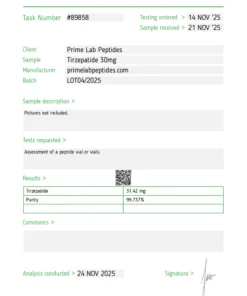
Peptides
Peptides
Peptides
Peptides
Peptides
Reviews
There are no reviews yet.