
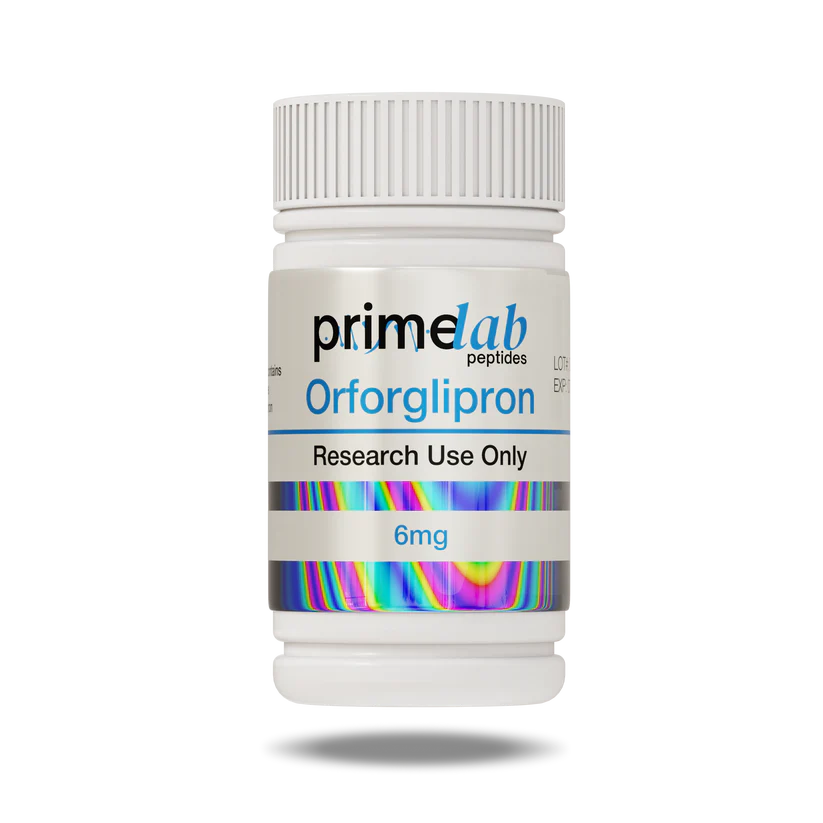
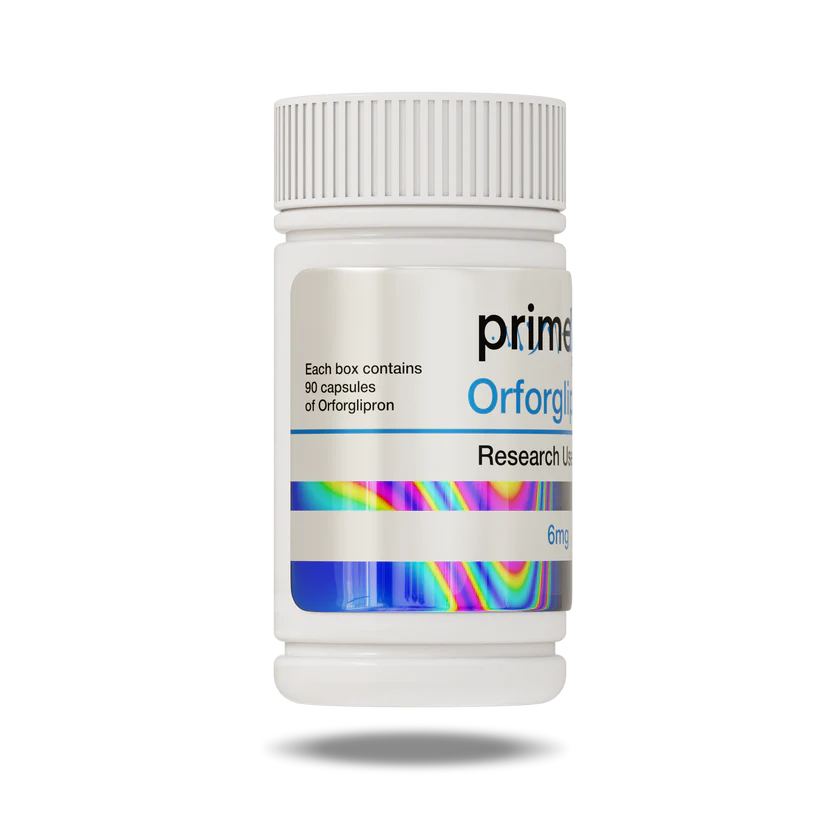
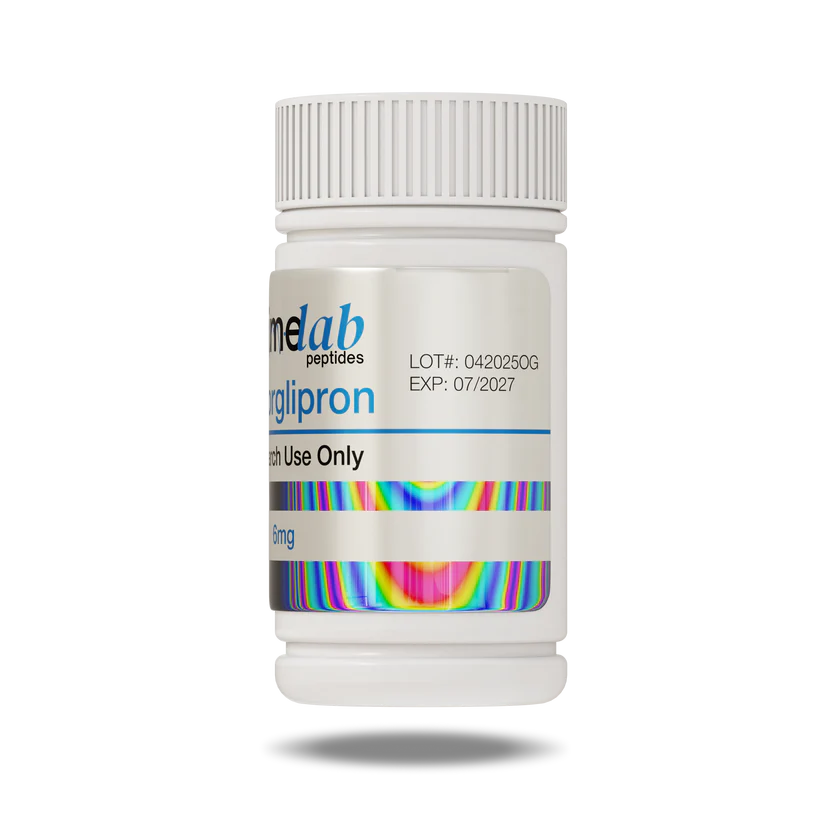
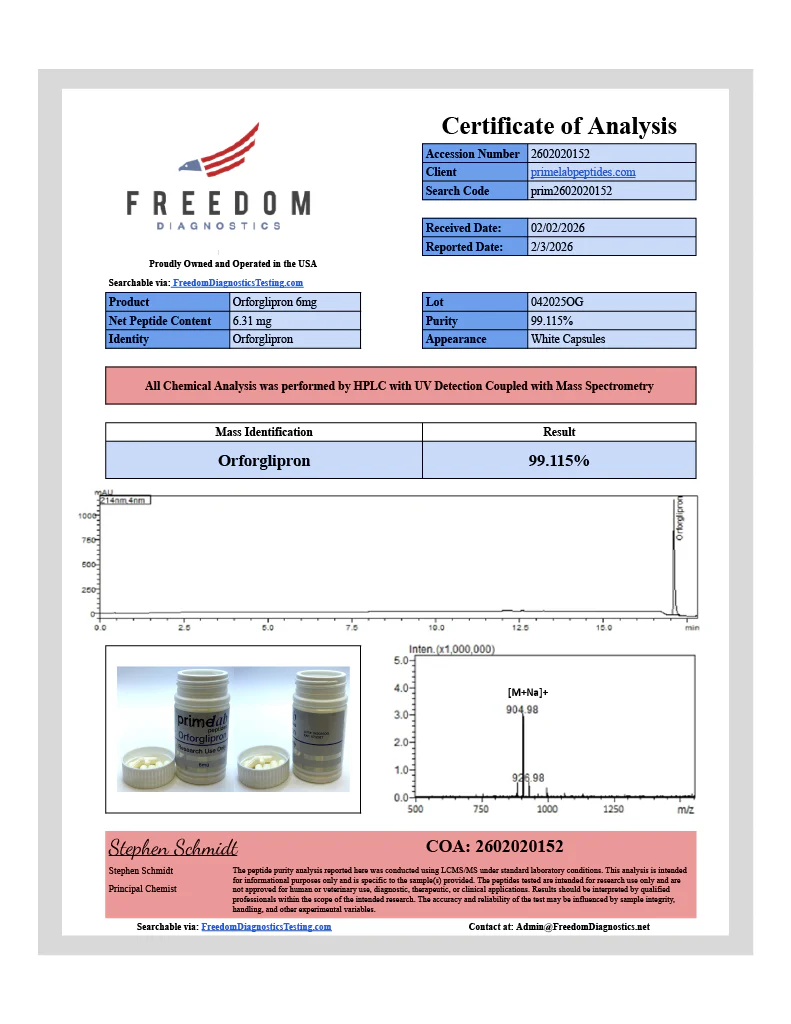
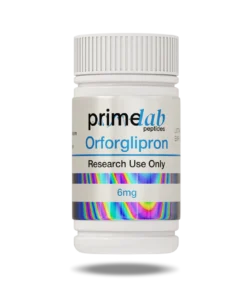
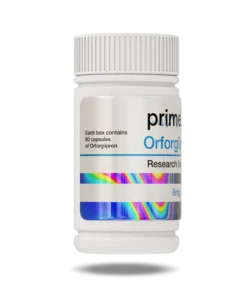
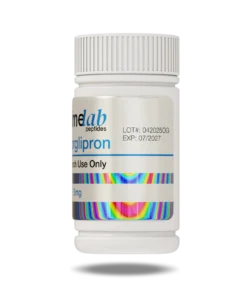
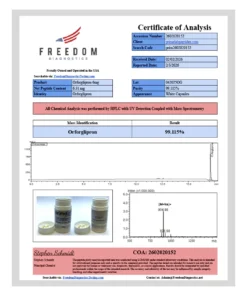
Orforglipron – 6mg For Sale
Description
The Science Behind Oral GLP-1 Innovation: Why Orforglipron Changes Everything
Orforglipron (LY3502970, OWL833) represents a fundamental breakthrough in incretin research. As a non-peptide, small-molecule partial agonist of the GLP-1 receptor, it overcomes the two critical limitations that have constrained GLP-1 therapeutics: poor oral bioavailability and receptor desensitization. Where oral semaglutide achieves just 0.4-1% absorption requiring fasting and absorption enhancers, Orforglipron demonstrates 20-40% bioavailability with no food restrictions — the first truly practical oral GLP-1 agonist.
The mechanism is elegantly biased. Orforglipron’s activity is characterized primarily by cAMP signaling (G-protein coupled receptor activity) with minimal β-arrestin recruitment. This distinction matters: cAMP activation drives all the beneficial GLP-1 effects — glucose metabolism, gastric slowing, satiety signaling, and beta-cell protection. β-arrestin, by contrast, causes tachyphylaxis (receptor desensitization), requiring dose escalation or treatment breaks. By avoiding β-arrestin, Orforglipron maintains efficacy long-term.
Clinical evidence is substantial. Phase 2b trials show weight loss of 8.6-14.7% over 26-36 weeks (average 16 pounds over 40 weeks), with waist circumference reductions averaging 5.32 cm. A1c levels dropped up to 2.1% — significantly more effective than metformin or dulaglutide. Fasting glucose decreased 23-44 mg/dL. Critically, no significant hypoglycemia risk was observed, a common limiting factor in diabetes treatment.
Cardiovascular and inflammatory benefits extend beyond weight loss. LDL dropped 3.7-14.3%, triglycerides 8.4-16.6%, and ApoB (the primary driver of atherosclerotic plaque) 8.3-12.2%. HDL increased in many subjects. CRP levels — a systemic inflammation marker — decreased 26-39.3%, with implications for arthritis, neurodegenerative disorders, wound healing, and longevity research. These benefits occur even in non-obese individuals, confirming effects independent of weight loss.
For research teams investigating metabolic syndrome, diabetes pathophysiology, cardiovascular risk, inflammation, or GLP-1 receptor biology, Orforglipron provides an unprecedented tool: a stable, orally bioavailable, desensitization-resistant GLP-1 agonist with comprehensive human trial data across multiple metabolic endpoints.
For research use only. Not for human consumption.
Non-Peptide GLP-1 Agonist
The First Truly Orally Bioavailable GLP-1 Agonist: 20-40% Absorption Without Restrictions
Orforglipron (LY3502970) is a non-peptide, small-molecule partial agonist of the GLP-1 receptor with unprecedented oral bioavailability. While oral semaglutide achieves just 0.4-1% absorption requiring fasting and absorption enhancers, Orforglipron demonstrates 20-40% bioavailability in cynomolgus monkeys — with no food restrictions. Clinical trials show weight loss of 8.6-14.7% over 26-36 weeks, with A1c reductions up to 2.1%.
- 20-40% oral bioavailability (vs 0.4-1% for oral semaglutide)
- No fasting requirements or absorption enhancers needed
- Once-daily oral administration
- Weight loss: 8.6-14.7% over 26-36 weeks
- A1c reduction: up to 2.1% over 26 weeks
For laboratory research use only. Not for human consumption.
Biased Agonism
G-Protein Signaling Without β-Arrestin: Why Orforglipron Resists Desensitization
Orforglipron’s unique mechanism lies in its biased agonism. Its activity is characterized primarily by cAMP signaling (G-protein coupled) with minimal β-arrestin recruitment. The cAMP pathway drives all desired GLP-1 effects: glucose metabolism, gastric slowing, satiety, and beta-cell protection. β-arrestin causes receptor desensitization (tachyphylaxis) — by avoiding this pathway, Orforglipron maintains efficacy without requiring dose escalation or treatment breaks.
- Biased toward G-protein (cAMP) signaling
- Minimal β-arrestin recruitment
- Reduced risk of tachyphylaxis (desensitization)
- No dose escalation required for sustained effects
- Unique binding pocket on GLP-1 receptor
For laboratory research use only. Not for human consumption.
Multi-System Benefits
From Beta-Cell Protection to Cardiovascular Risk: Comprehensive Metabolic Research
Beyond weight and glucose, Orforglipron research reveals profound effects on cardiovascular and inflammatory markers. Clinical data shows LDL reduction of 3.7-14.3%, triglycerides down 8.4-16.6%, and ApoB (the primary driver of atherosclerosis) reduced by 8.3-12.2%. CRP levels — a key inflammation marker — dropped 26-39.3%. Crucially, GLP-1 stimulation promotes beta-cell survival and proliferation, making it one of the only known mechanisms for potentially reversing diabetes pathology.
- Beta-cell protection: Prevents apoptosis, promotes new cell growth
- LDL cholesterol: -3.7% to -14.3%
- Triglycerides: -8.4% to -16.6%
- ApoB (atherosclerosis driver): -8.3% to -12.2%
- CRP (inflammation marker): -26% to -39.3%
- No significant hypoglycemia risk
For laboratory research use only. Not for human consumption.
Be the first to review “Orforglipron – 6mg”
Related products
Peptides
Peptides
Peptides
Peptides
Peptides
Peptides
Peptides
Peptides
Reviews
There are no reviews yet.